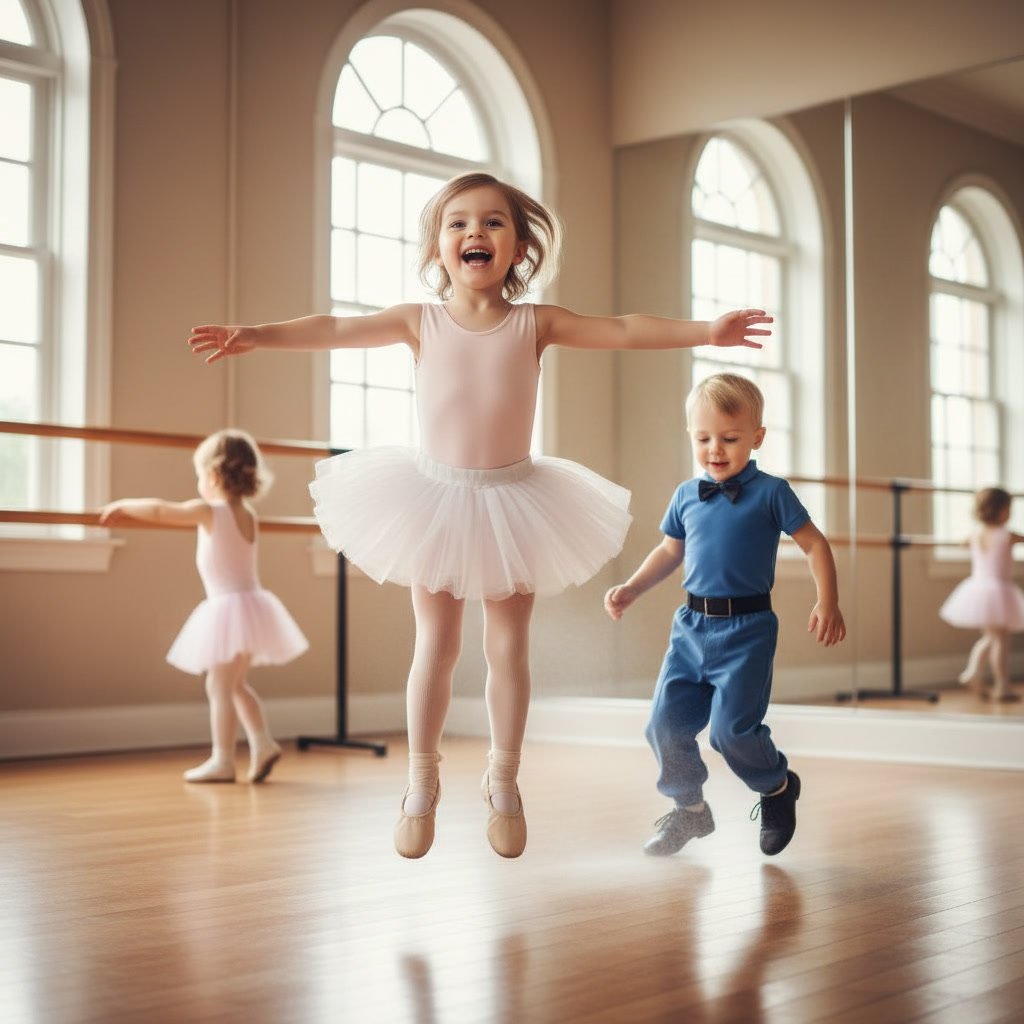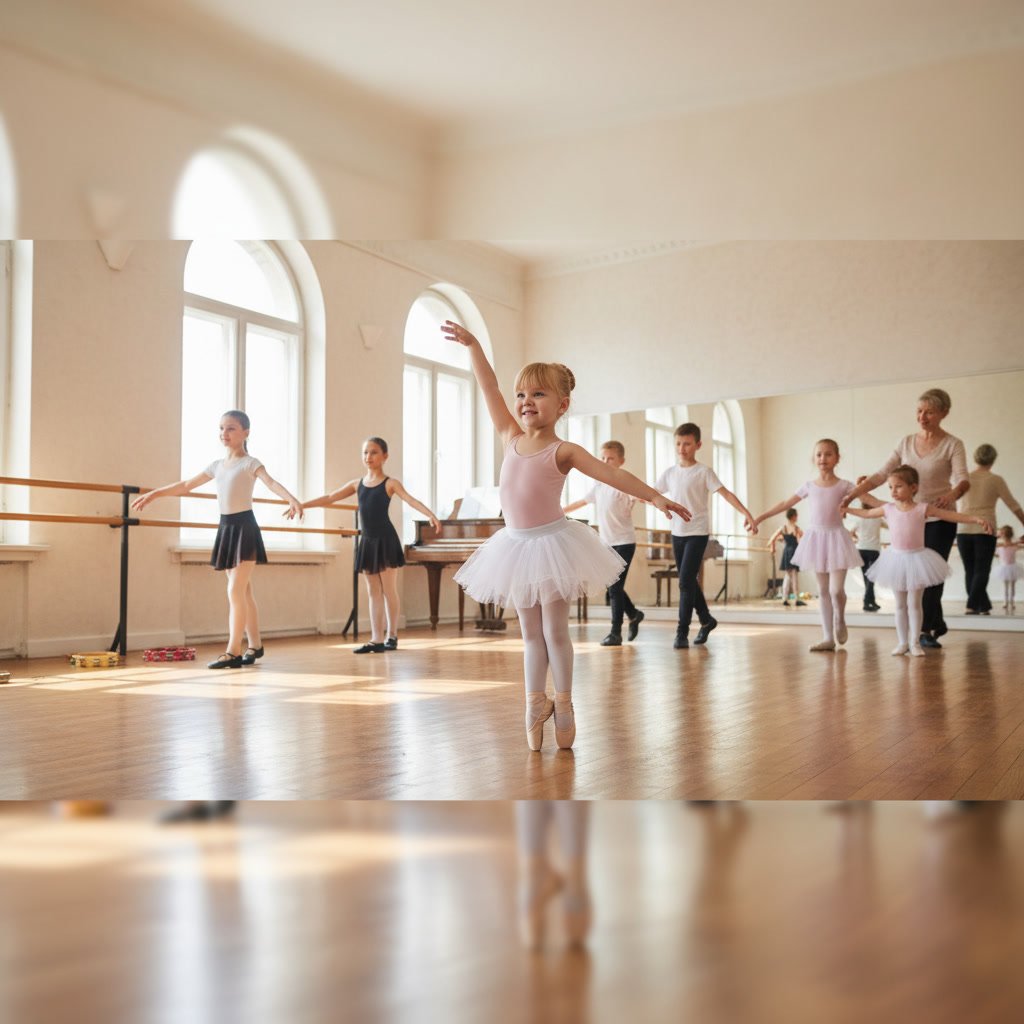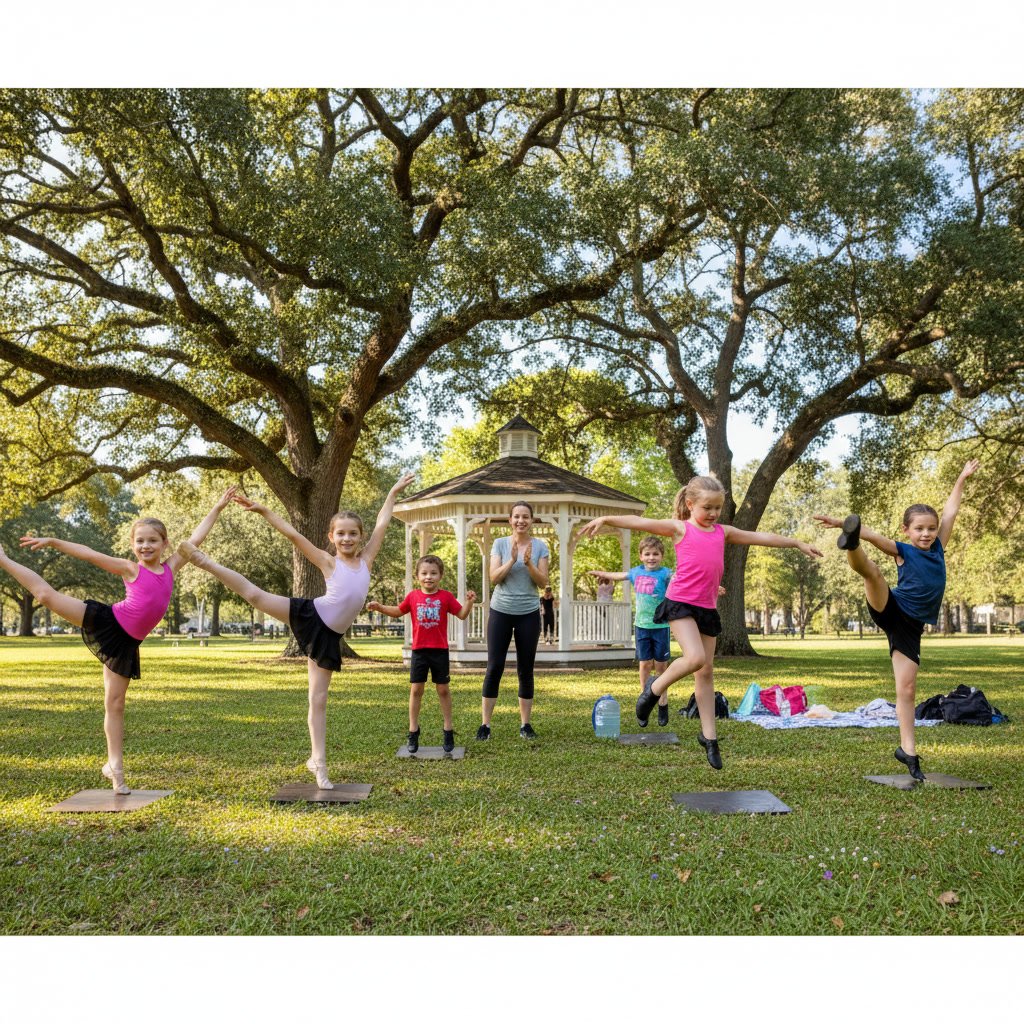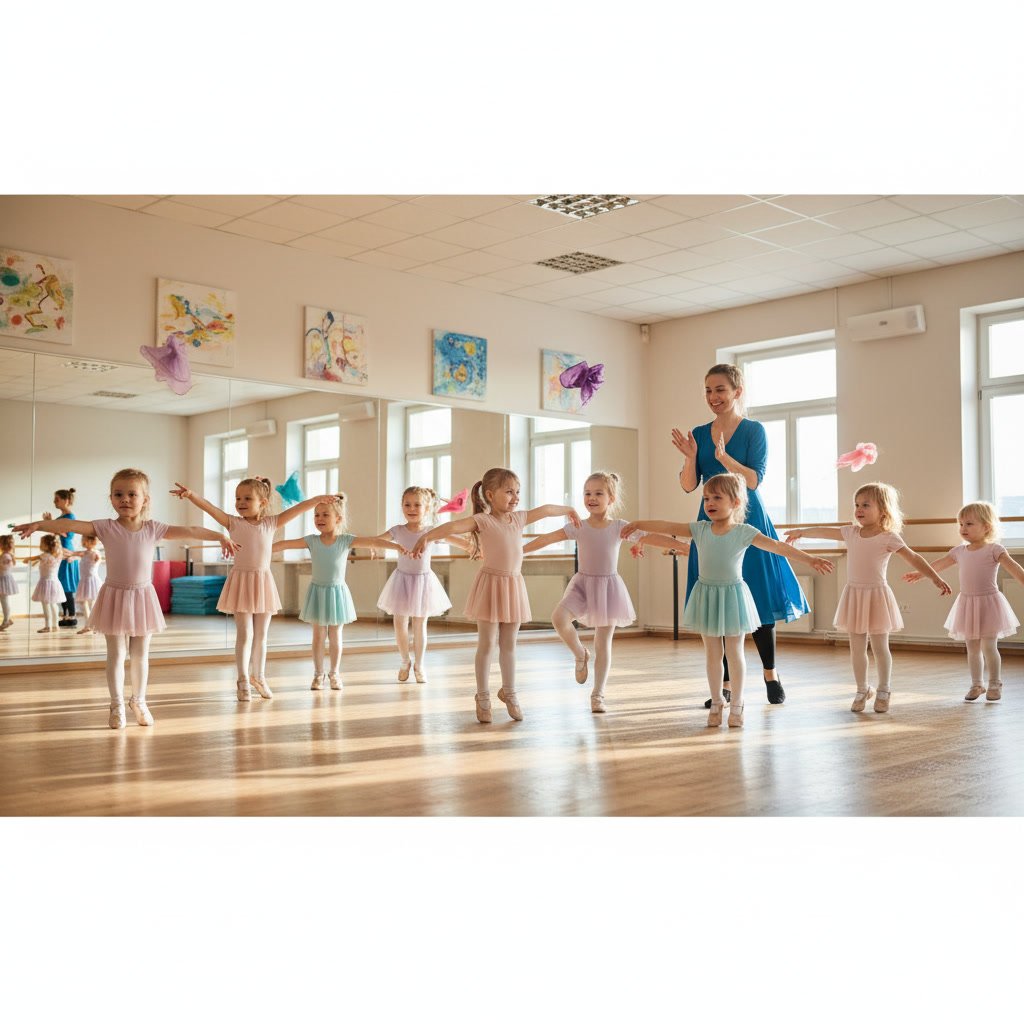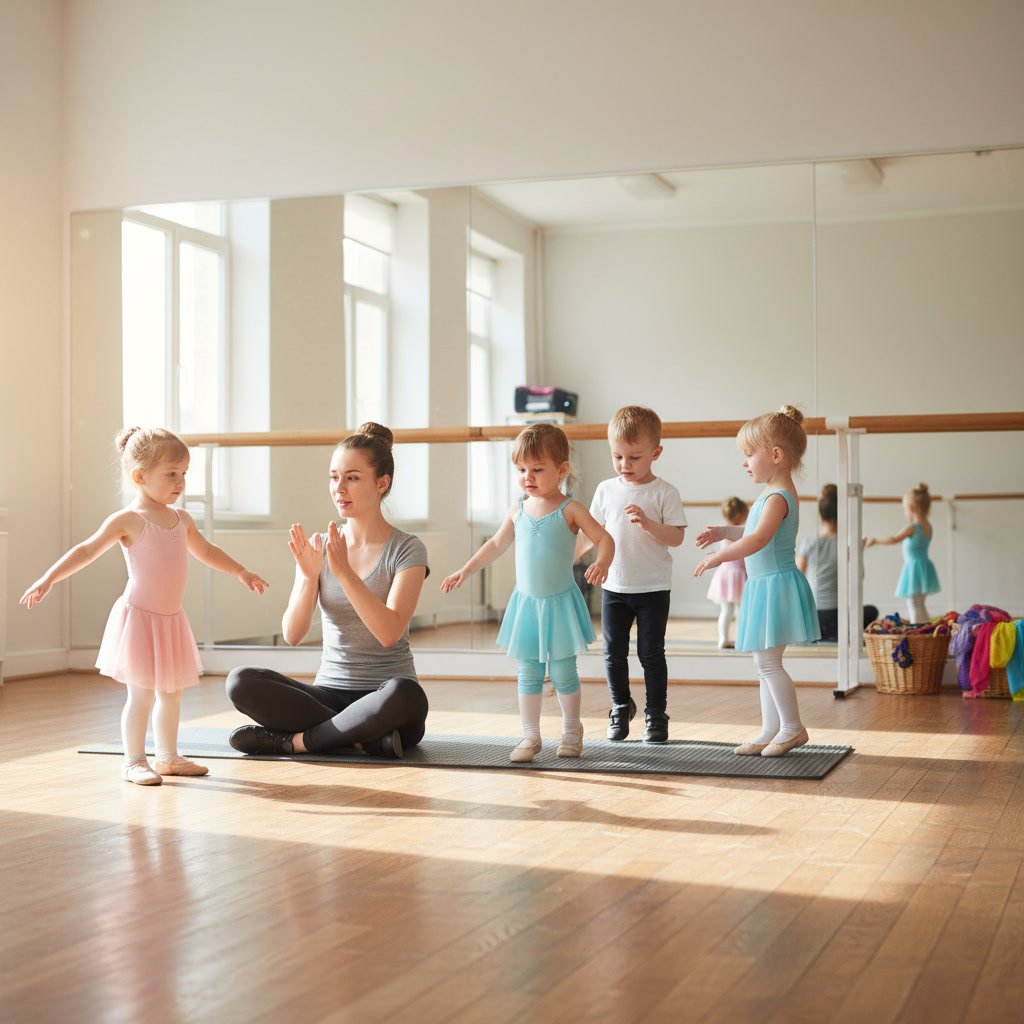
Ballet and tap classes for toddlers and young children introduce foundational dance skills through structured play, creative movement, and age-appropriate exercises that develop coordination, rhythm, and body awareness. These classes typically run 30 to 45 minutes and use simple vocabulary, demonstration, and repetition to help children as young as 18 months grasp basic positions, steps, and patterns. Teachers adapt traditional dance techniques into engaging activities that hold a young child’s attention while building the physical and cognitive skills necessary for more advanced training as they grow.
Why Structured Movement Matters in Early Childhood
Young children between the ages of one and eight are in critical developmental windows for motor skills, spatial awareness, and social interaction. Structured movement classes provide repeated opportunities to practice balance, coordination, and following multi-step instructions in a supportive group setting. Unlike unstructured play, these classes introduce patterns and sequences that challenge the developing brain to remember, anticipate, and execute movements in order.
Research in early childhood development shows that children who participate in regular physical activity improve executive function, attention span, and emotional regulation. Dance classes add the element of musicality, which strengthens timing and auditory processing alongside physical benefits.
How Young Children Learn Dance Differently Than Older Students
Toddlers and preschoolers process information through sensory exploration and imitation rather than verbal instruction alone. Effective teachers demonstrate each movement multiple times, use simple cues like “toes pointed” or “knees bent,” and incorporate props such as scarves, ribbons, or drums to make abstract concepts tangible. A three-year-old may not understand “plie” as a term, but will mimic bending knees when the teacher shows the action and pairs it with a visual or tactile cue.
Attention spans at this age range from five to fifteen minutes depending on the child’s age and temperament. Classes rotate between activities every few minutes to maintain engagement: a warm-up song, a ballet exercise at the barre or in a circle, a tap rhythm game, and a cool-down story dance. This variety prevents frustration and keeps energy levels appropriate for learning.
What a Typical Class Structure Looks Like
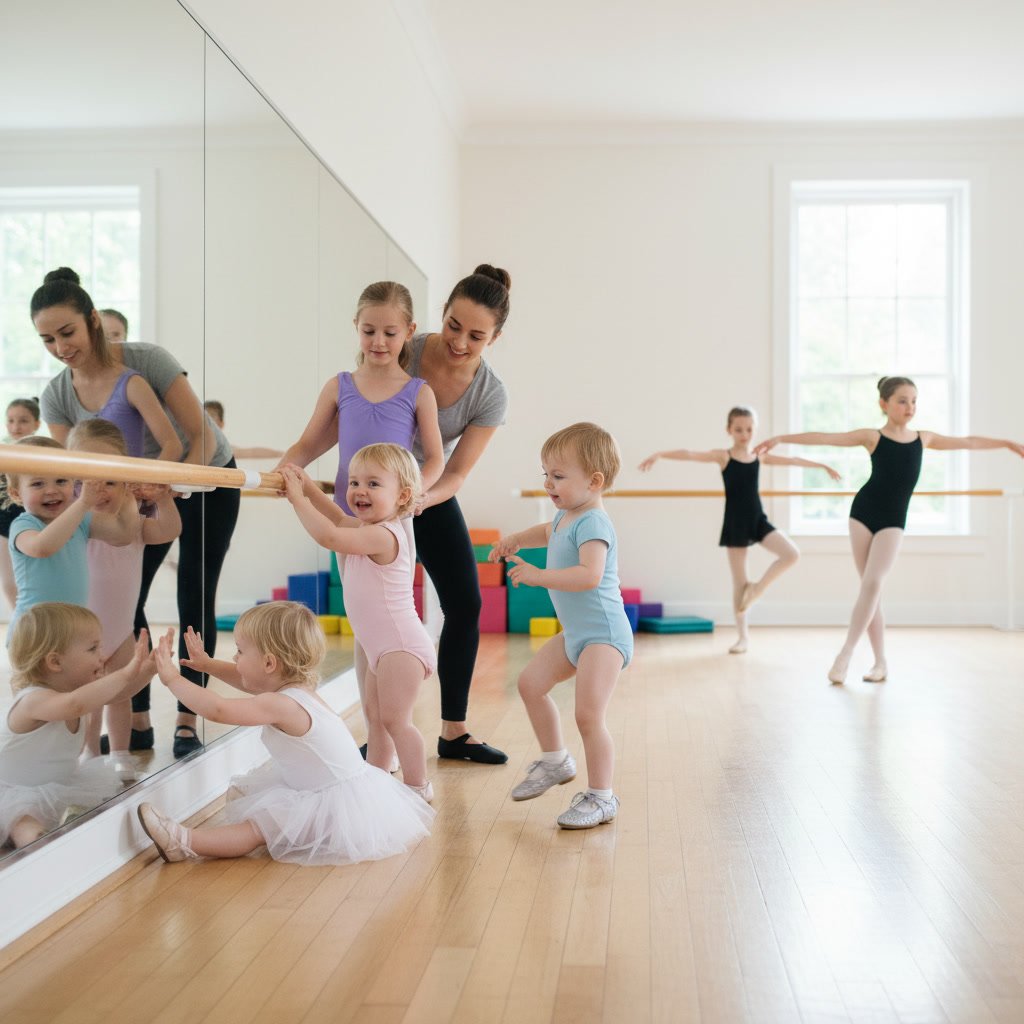
Most beginner ballet and tap classes for toddlers begin with a welcome song or circle time where children learn to identify their feet, hands, and body parts. This brief introduction builds group cohesion and transitions children from the outside world into the studio environment. Teachers then move into a warm-up that might include stretching, marching, or simple locomotor movements like skipping or galloping.
The main portion of class alternates between ballet fundamentals and tap rhythms. In ballet segments, children practice positions, arm movements, and simple combinations like a tendu or a releve. In tap segments, they learn to make sounds with their shoes through stomps, shuffles, and toe taps. Each skill is repeated across multiple weeks so that children internalize the movement before layering on new elements.
Classes conclude with a cool-down activity, often a creative movement exercise where children interpret music or a short story through dance. This allows for self-expression and reinforces the idea that dance is both structured and imaginative.
The Role of Repetition and Routine
Young children thrive on predictability. Using the same opening song, warm-up sequence, and closing ritual each week gives toddlers a sense of mastery and security. When a child knows what comes next, they can focus on improving the quality of their movement rather than managing anxiety about the unknown.
Repetition also allows incremental skill building. A two-year-old may simply stomp their feet during the first tap exercise. By week four, that same child might stomp on the beat. By week eight, they add a directional element, stomping forward or backward. This gradual layering respects developmental readiness and prevents frustration.
Teaching Methods That Work for This Age Group in Greenacres
Effective instruction for toddlers relies on short, clear directions paired with enthusiastic modeling. Teachers use exaggerated facial expressions, vocal variety, and physical proximity to capture attention. Positive reinforcement is frequent and specific: “I love how you pointed your toes” rather than generic praise.
Many studios, including those offering classes in Greenacres, incorporate themes or stories into lessons. A ballet and tap class might become a trip to the zoo, with each animal inspiring a different movement quality. This narrative structure helps children remember sequences and adds an element of imaginative play that resonates with their developmental stage.
Teachers also adjust expectations based on individual readiness. Some children will master a skill quickly, while others need more time or a modified version. The best instructors differentiate within the group, offering challenges to advanced movers and support to those still building confidence.
What Parents Should Expect in the First Few Weeks
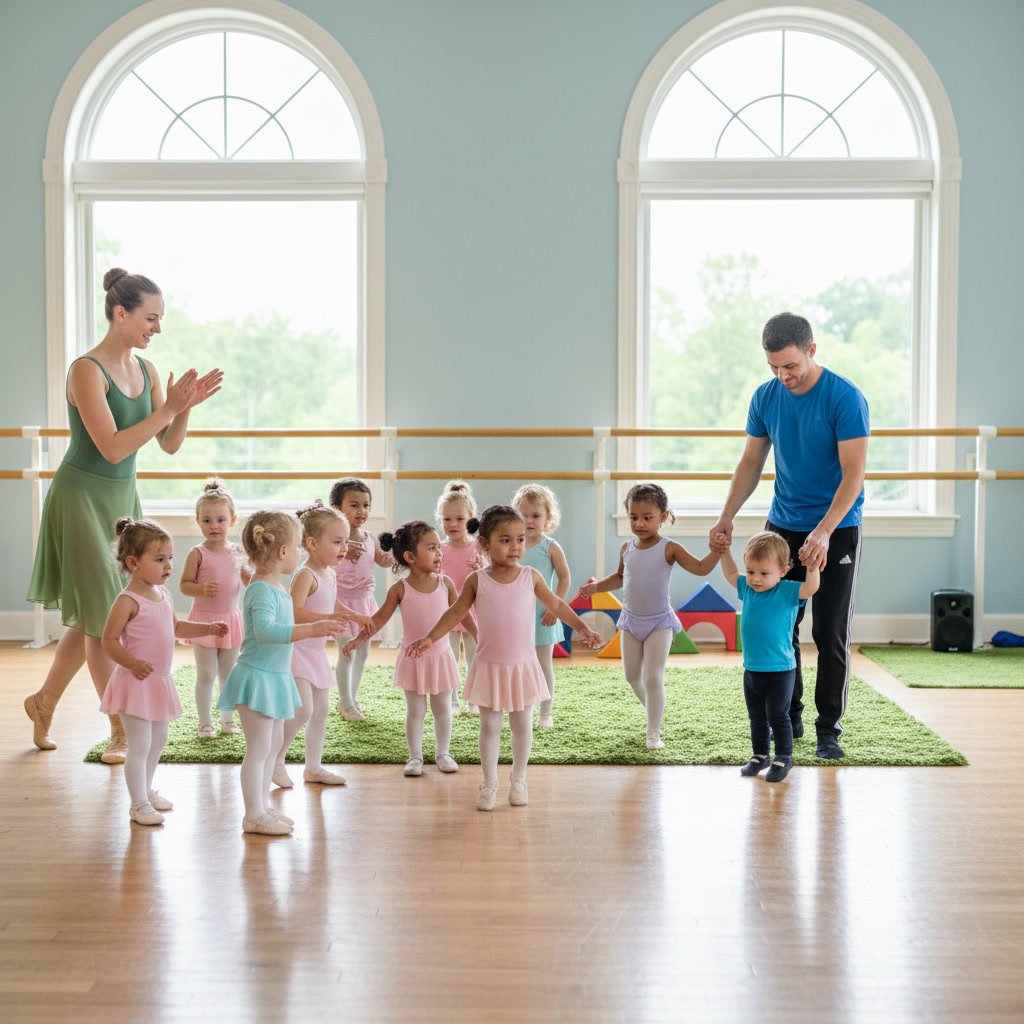
Initial classes often involve some separation anxiety, distraction, or reluctance to participate. This is completely normal. Teachers trained in early childhood development understand that some children need several sessions to feel comfortable in a new environment. Parents are often invited to observe or even participate in the first class or two, especially in Mommy and Me formats designed for the youngest dancers.
Children may not follow every instruction perfectly. A toddler might wander to the corner to examine a prop, sit down in the middle of an exercise, or simply watch instead of doing. Patient teachers redirect gently and recognize that observation is a valid form of learning at this age. Many children who spend the first class watching are fully engaged by the second or third session.
Progress in the early weeks is measured in small milestones: staying in the room for the full class, attempting one or two movements, or interacting with peers. Technical precision is not the goal. Building positive associations with movement, music, and group learning is the foundation for everything that follows.
The Physical Benefits of Early Dance Training
Ballet and tap develop different but complementary physical skills. Ballet emphasizes posture, alignment, flexibility, and controlled movement. Even simple exercises like standing in first position or reaching arms overhead teach body awareness and core engagement. Tap focuses on rhythm, coordination, and quick footwork, strengthening ankles and improving auditory-motor integration.
Together, these disciplines enhance gross motor skills, fine motor control, and proprioception. Children gain strength, balance, and spatial orientation that transfer to other physical activities and daily tasks. Dance also promotes healthy bone development and cardiovascular fitness when practiced regularly.
For families interested in a broader movement foundation, some studios offer complementary programs. Classes in tumbling and gymnastics can further develop strength and body control alongside dance training.
Cognitive and Emotional Growth Through Dance
Learning choreography, even at a basic level, strengthens memory and sequencing skills. Children must remember the order of movements, anticipate transitions, and adjust their actions based on auditory cues. This cognitive challenge supports brain development in areas related to planning, problem-solving, and attention.
Dance classes also provide a structured environment for emotional regulation. Children practice waiting their turn, managing disappointment when a skill is difficult, and celebrating small victories. Teachers model emotional vocabulary, helping children name feelings and develop coping strategies in a low-stakes setting.
Group classes build social skills naturally. Toddlers learn to share space, mirror peers, and cooperate during partner activities. These early social experiences lay the groundwork for positive peer relationships in school and other group settings.
How Teachers Adapt Technique for Different Age Groups
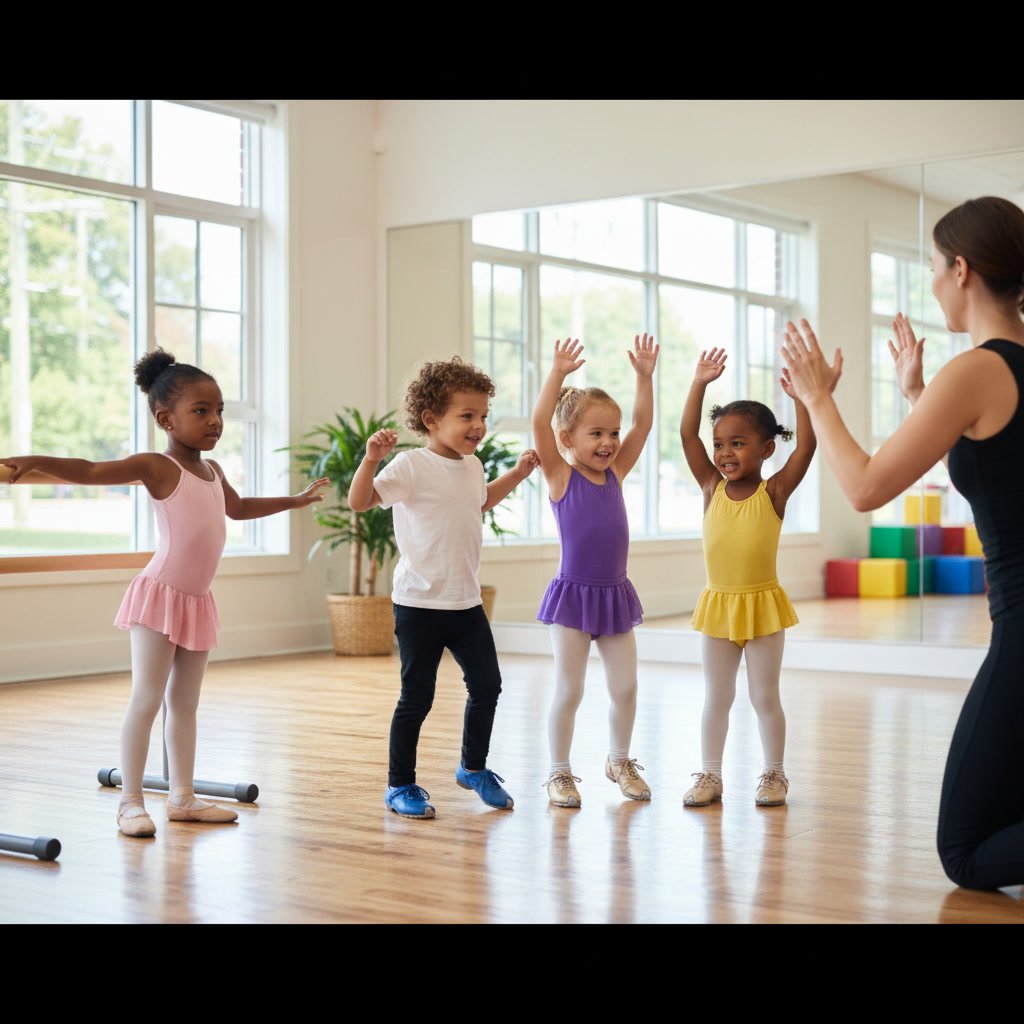
A class for 18-month-olds looks very different from a class for six-year-olds, even when both focus on beginner ballet and tap. The youngest students engage in more free exploration, simple call-and-response games, and parent-involved activities. Three- and four-year-olds can handle short sequences and begin to understand positions and steps by name. Five- to eight-year-olds are ready for longer combinations, more precise corrections, and the introduction of musicality concepts like tempo and dynamics.
Teachers with backgrounds in child development and dance pedagogy understand these distinctions. Instructors who have trained in early childhood education bring additional tools for managing group dynamics, differentiating instruction, and recognizing developmental milestones. This expertise ensures that each class meets children where they are and gently guides them forward without pushing beyond their readiness.
Many dancers who now teach young children started their own training at a similar age and remember what made classes enjoyable versus frustrating. This lived experience informs their teaching choices and helps them create welcoming, joyful environments where mistakes are part of learning and effort is always celebrated.
Choosing the Right Program for Your Child
When evaluating options, consider class size, teacher qualifications, and studio environment. Smaller classes allow for more individualized attention, which matters greatly at this age. Teachers with training in both dance and early childhood development offer the best combination of technical knowledge and age-appropriate pedagogy.
Visit studios to observe a class in action if possible. Notice how teachers redirect behavior, whether children seem engaged and happy, and how the space is organized for safety and accessibility. Studios that prioritize a nurturing atmosphere over competition and perfectionism tend to produce children who stay in dance longer and develop a genuine love for movement.
Ask about performance expectations. Some programs include a year-end recital, while others focus solely on in-class learning. Neither approach is inherently better, but it helps to know what commitment you are making. For families exploring options, reading about the best dance classes in Greenacres FL for toddlers and preschoolers can provide helpful comparisons.
Building a Foundation for Lifelong Movement
The skills children gain in early ballet and tap classes extend far beyond the studio. Coordination, rhythm, and body awareness support athletic development in sports, recreational activities, and everyday movement. Confidence built through mastering new skills translates to academic settings, social situations, and personal challenges.
Many children who start dance at a young age continue for years, progressing into more advanced styles and techniques. Others try dance for a season or two and then move on to other interests, carrying with them the physical literacy, discipline, and joy they experienced. Both paths are valuable. The goal of early dance education is not to create professional dancers but to give children tools for healthy, expressive, confident lives.
Introducing your toddler or young child to structured movement through dance offers developmental benefits that reach every area of growth. Lisa’s Dance and Exercise provides expert instruction in beginner ballet and tap for children ages 18 months to eight years, taught by experienced professionals who understand how young learners grow and thrive. Classes meet children at their developmental level and build skills through play, repetition, and positive encouragement.
If you are ready to explore dance classes for your child, reach out to learn more about current offerings and schedule options. Call +15613175738 to speak with the team and find the right fit for your family.